Hatch Robotics took a nine-figure Pre-A, Qiuzhi Technology closed another $100M angel-plus round to enter unicorn territory; and Google DeepMind's Gemini Robotics 2 let robots coordinate from feet to fingertips for the first time.
Robots' hands are finally learning to work.
MiniMax formally open-sourced H3, releasing two H3-Base checkpoints with support for SGLang, vLLM, diffusers and ComfyUI, plus guides for local deployment, API reproduction and prompting. Creators and developers can plug a "direct-to-2K video model" into their own toolchains for the first time.
H3 is a multimodal generation system supporting mixed text, image, video and audio inputs, outputting up to 2K, 24 FPS, 32kHz native stereo. One detail: 2K generation depends on H3-Regenerate-2K, which is not yet open-sourced. Release, API, weights, full capability: four things in four steps.
When open video models run locally, "generating video" becomes as simple as running an open-source library for the first time.
MiniMax H3 · official image · the open multimodal model that outputs 2K video directly
Google DeepMind released the Gemini Robotics 2 series on July 30, achieving whole-body coordinated control of humanoid robots from feet to fingertips for the first time, with standout performance on tabletop picking and dexterous manipulation; the same week, Tesla's Optimus lead announced plans for 10M-unit capacity.
The key to Gemini Robotics 2 is making a robot "crouch down to pick something up" feel natural. Robot control has almost always trained lower and upper body separately: legs manage balance, arms manage grasping, with moments of hesitation at every switch. This model puts legs and ten fingers into one policy network; crouch, reach, grasp, stand, all in one flow.
When control extends from "lower-body balance" to "ten fingers", robots truly start touching the details of the real world.
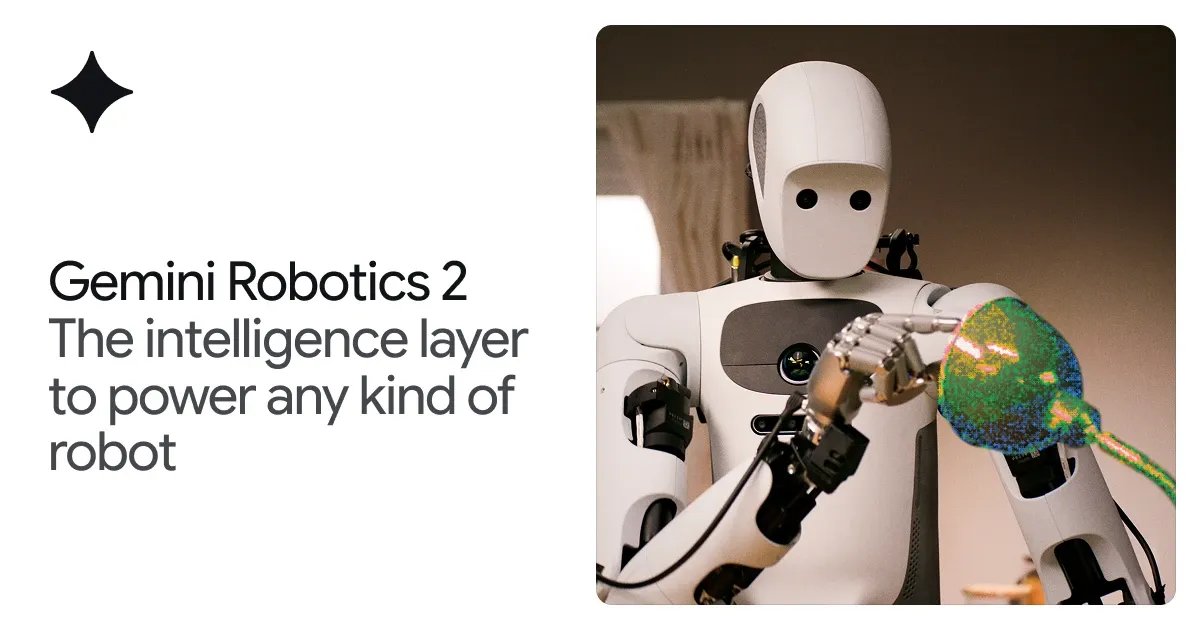
Gemini Robotics 2 released: from foot control to fingertips, whole-body coordination.
The GitHub Agent was revealed to have a security vulnerability; agents that write code and run commands autonomously hit another isolation problem, while the same period's "AI stock god" losses reminded the industry that autonomous agents' fault tolerance is far from reassuring.
This vulnerability's details are instructive: while running commands in a sandbox, the agent bypassed temporary-directory permission limits and read the host's SSH configuration and certain dotfiles. GitHub shipped a hotfix within 24 hours, but the deeper issue is that today's agent sandboxes are built on "expected tasks", and the command paths an agent assembles for itself always exceed expectations. Gartner's latest report lists "agent sandboxes" as this year's security debt enterprises most need to pay down, ranked above last year's "model jailbreaks".
Letting agents take the keyboard is the trend, but every boundary crossing reminds us: autonomy and safety have to grow together.

GitHub Agent vulnerability exposed.
"Do not be a meat proxy. Do not pass AI output along to others unchanged."
— Niklas Gruhn · coined "meat proxy" · simonwillison.net
"The point is not to avoid using AI; it is to avoid being only a repeater."
— Simon Willison · AI researcher · simonwillison.net
Simon Willison quoted David Crawshaw's prompt: have an agent fetch upstream changes nightly, rebase local modifications, check results and replace the current version, handing the most tedious software maintenance to an agent that runs overnight.
This is not a product launch, but it is vivid: open the repo the next morning and yesterday's upstream changes are merged, conflicts resolved, builds verified. Placed next to "meat proxy", it forms two ends of one discussion: which parts of work should people hand over, and which must they keep checking themselves.
Agents entering software maintenance is not "replacing programmers"; it is taking over the most mechanical night shift.
ComfyUI's official page shows MiniMax H3 is now available via Open Weights or Partner Nodes, supporting multimodal input, native stereo, up to 2K, with 5-15 second generations.
For creators, H3 stops being a "try it on the website" toy and plugs into familiar node-based workflows: text, image and audio as simultaneous generation conditions, video and sound out together, straight into editing. Open weights plus ComfyUI is the last mile of turning "making videos with AI" from novelty into routine.
When open models grow into entrances like ComfyUI, the creation-tool ecosystem starts treating generation capability like a utility hookup.
MiniMax H3 formally open-sourced, video generation moving from API to local workflows; ComfyUI already integrated.
Gemini Robotics 2 released with whole-body coordination; the GitHub Agent leaked a vulnerability.
"Do not be a meat proxy": which parts of work to hand agents has become a community discussion.
David Crawshaw handed software maintenance to an overnight agent: automatic rebase, automatic verification.
Open models, robots and agent maintenance converged on one day. AI competition has moved from benchmark scores to "who grows into real workflows first".
Stewart Island, New Zealand — NASA's satellite captured, around S47.0 E167.8, a forest-covered island floating in the South Pacific: New Zealand's third largest, where birds outnumber people.

Stewart Island · New Zealand · photographed by NASA · 47.0°S, 167.8°E
A forest-covered island rests in the cold water of the mid-forties latitude south, New Zealand's third largest, where birds outnumber people. While we argue on screens about whether robots can do housework, Stewart Island's tides count off the days along its shore at the moon's pull. After a day of AI news, Earth still has places that need no GPU cooling. Mountains and seas — stay curious, keep exploring.