Simon Willison released LLM 0.32, making "see how the model thinks" a default capability; the same week, MiniMax H3 ran on a MacBook for the first time, and the MCP toolchain began reorganizing around "statelessness".
It is the summer of toolchains: AI is growing into every developer's daily routine.
Simon Willison released LLM 0.32, calling it the most significant upgrade since the project's initial release. Reasoning traces can now go to stderr without polluting standard output; OpenAI Responses, server-side tools and content-addressable SQLite logs are new; the default model switched to GPT-5.6 Luna.
For developers, three things land at once: you can see how the model "thinks" (reasoning traces), connect server-side tools (not just local ones), and query history (SQLite logs). Models used to be black boxes; now the whole chain from thinking to calling to logging is inspectable.
Simon Willison · official image · the full LLM toolchain made inspectable
Simon Willison got MiniMax H3 running on an M5 Max MacBook Pro (PipeNetwork/minimax-h3-mlx). The download was about 115GB; generating one video took nearly 45 minutes.
The video quality was decent, but with no prompt given for audio it produced "strange vocal noise". This is the norm of local runs: once you have the weights, prompt tuning remains your own work. When open video models run locally, both the joy and the trouble of tuning return to the user's hands.
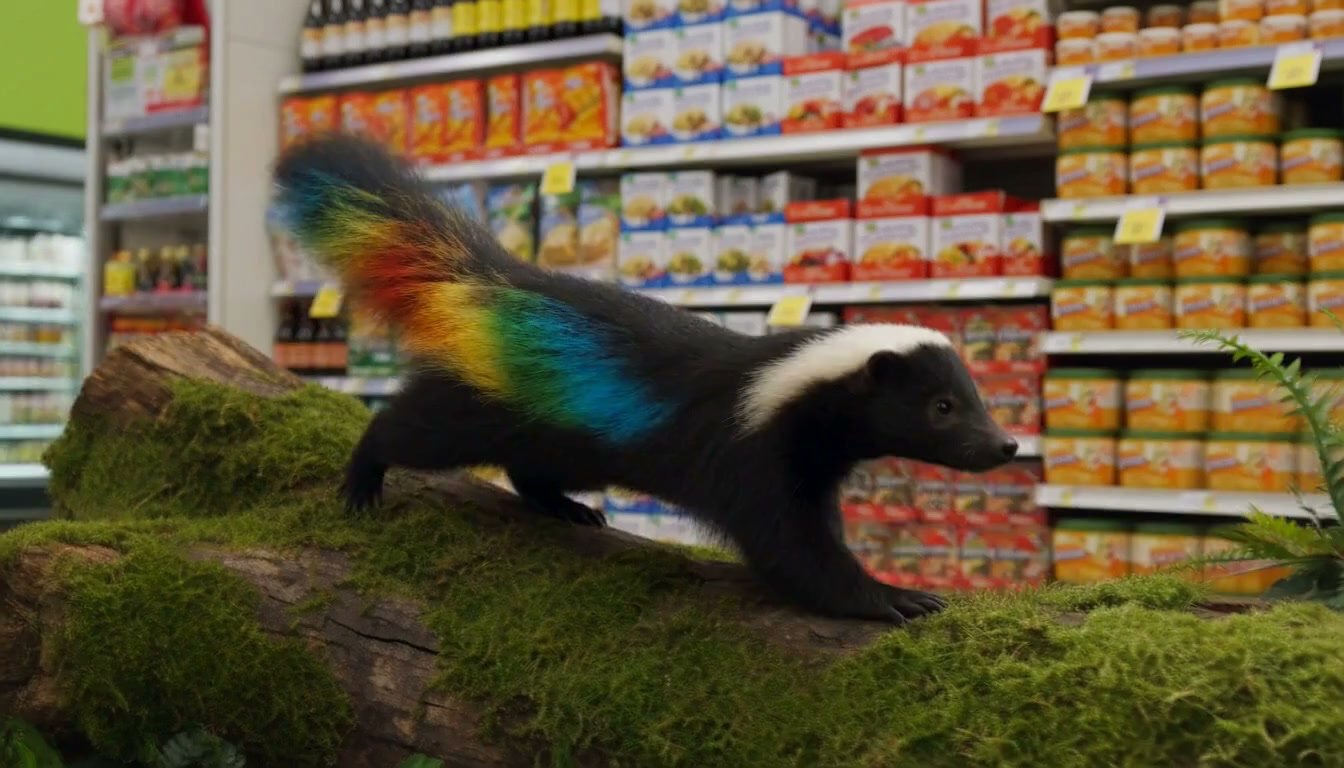
MiniMax H3 on a MacBook: the download.
Alibaba set Qwen3.8-Max's open-source date for next week: 2.4T total parameters, 95B active, API pricing of $2 input / $6 output per million tokens, with the smaller 27B flagship Qwen3.8-27B open-sourced in the same batch.
Third-party evaluations place it precisely. Frontend Code Arena: 1668 Elo, ranked fourth behind only Claude Opus 5 Max (1705) and Kimi K3 Max (1676); Vision Arena 1305, second place. Vals composite index 66.1: second among open models, tenth of all 43. SWE-bench 87.3%, ahead of GPT-5.5 (82.6%) and GLM-5.2 (83.3%). More telling is the improvement curve: Vals rose from 3.7 Max's 57.5 to 66.1, an 8.6-point gain in two and a half months, while prices fell from $2.5/$7.5 to $2/$6. Scores rising and prices falling moving together for the first time.
These specs stretch the distance between "open source" and "runnable" to its widest ever: 95B active against 2.4T total is about 4% activation, an even sparser MoE than Qwen3-235B. Jamin Ball ran the numbers: K3 alone needs over 1TB of memory just to load weights, starting at eight H100s; open weights do not mean locally runnable, and the real value lies in ecosystem influence. One more open question: developers noted license terms appear to prohibit downloading and use in the US, EU, UK and Korea, unclarified by Alibaba that day. Open weights may only mean "downloadable", not "lawfully usable".
When open flagships shift from "callable on someone else's servers" to "weights delivered into your hands", the first-order question of competition changes from how smart the model is to who can actually run it.
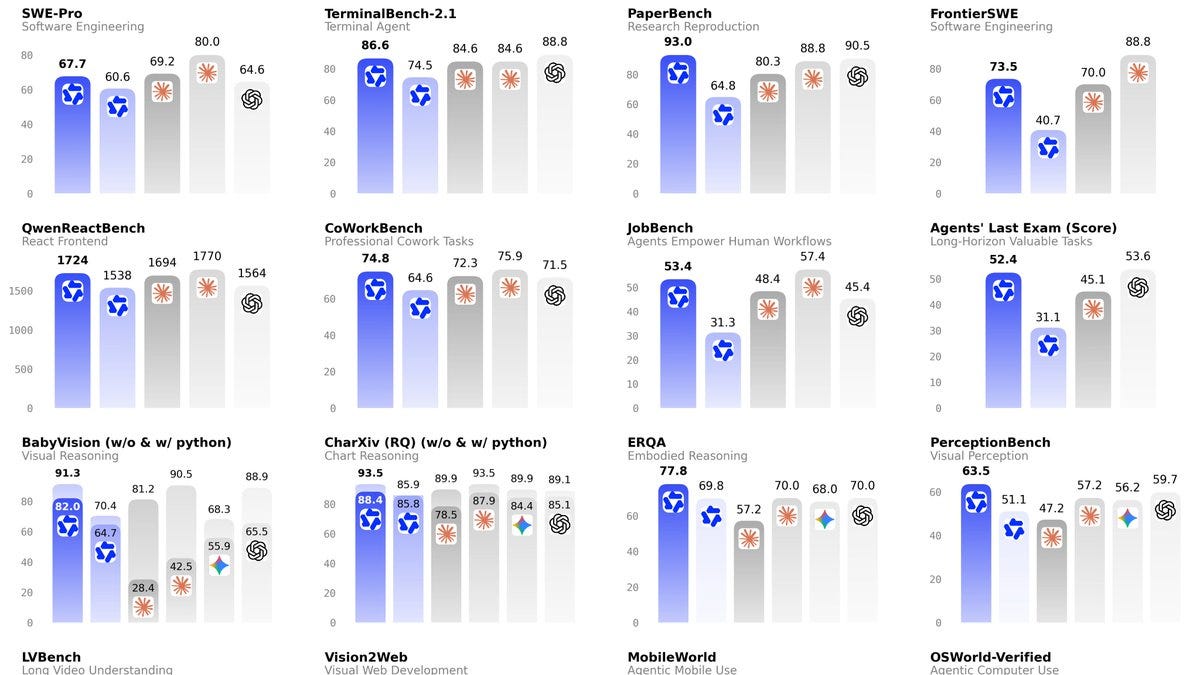
Qwen3.8-Max announces its open-source 2.4T flagship.
Simon Willison continued experimenting around the MCP toolchain, noting that the July 31 spec changes have already started driving toolchain updates.
He has connected more workflows across LLM, Datasette and MCP. For developers, this means agent tool integration will look more like ordinary web services and less like complex protocol handshakes.
"This is the most significant upgrade since the project's initial release."
— Simon Willison · LLM author · simonwillison.net
"A coding agent's value is not in writing code, but in verifying code by itself."
— Steve Yegge · Software engineer · simonwillison.net
LLM 0.32 brought reasoning traces, server-side tools and SQLite logs to the table all at once.
MiniMax H3 ran locally on a MacBook for the first time: 115GB downloaded, 45 minutes per video.
The MCP toolchain reorganized around "statelessness"; connecting agent tools looks more and more like connecting web services.
Developer tools were the day's protagonist. AI's value is shifting from "how smart the model is" to "how smooth the tools are".
The Tyndall Glacier, southern Chile. NASA's satellite captured the glacier after calving, broken ice floating in the fjord like scattered chess pieces, brilliantly blue.
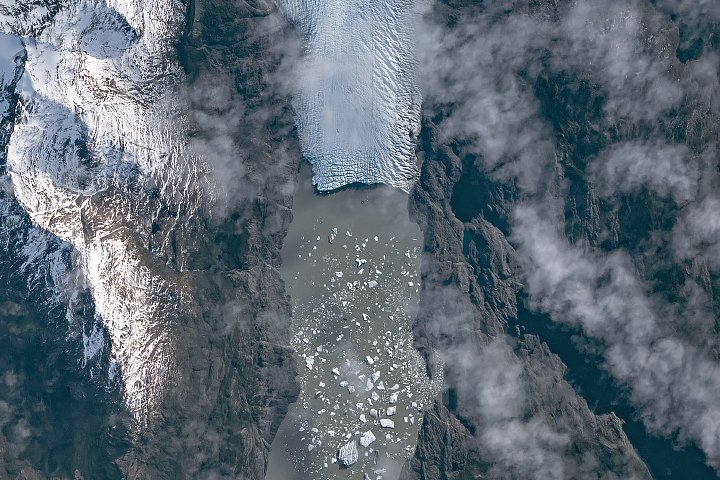
Tyndall Glacier · southern Chile · photographed by NASA · 51.2°S, 73.3°W
After calving, broken ice floats in the fjord like scattered chess pieces, brilliantly blue. While we debug models' reasoning traces on screens, this glacier moves tens of thousands of years of ice into the sea inch by inch at its own pace. After a day of AI news, Earth still has places that need no GPU cooling. Mountains and seas — stay curious, keep exploring.