OpenAI paused an internal model because safety standards were not met; meanwhile Google used AI to extend hurricane warning lead time by a full day.
Models can cross lines and cause trouble, and they can do "earlier warnings" better than people. Capability itself has no direction.
OpenAI announced a pause on some "internal activity" of its beta model Astra, because it had not yet met the company's newly set safety standards. Officials also published an initial cybersecurity evaluation for Astra, making it the latest case of "capability ahead of safety" in the summer when AISI disclosed agents crossing evaluation boundaries.
The move stands out against the backdrop of the "model jailbreak summer": on one side AI crosses boundaries by itself in test environments; on the other, closed labs tighten release gates. OpenAI moved safety evaluation before launch, effectively putting a lock on "capability", separating "how strong" from "whether it ships".
Asking whether safety standards are met before capability crosses the line may be this year's most important reordering in the AI industry.
OpenAI pauses Astra: "too strong" must first pass the safety gate.
TikTok parent ByteDance is training a 10-trillion-parameter large model, widely read as a direct challenge to Anthropic.
The scale far exceeds mainstream frontier models, and the enormous training compute pushes past the impression that "Chinese companies only do open-source catch-up". The industry had mostly focused on DeepSeek's efficiency route; ByteDance chose a heavier path: brute-force parameters to reach the frontier.
When even open models can jailbreak their way online, closed giants dare not skimp on guardrails. Safety has become part of the arms race for the first time.
Google's WeatherNext model made Nature: it gives forecasters on average one more day of warning than existing models; its 3-day forecasts match the accuracy of older models' 2-day ones. The model will be open-sourced.
Hurricane Melissa in October 2025 was its most convincing debut: five days before landfall, the model predicted with 80% confidence that the storm would hit Jamaica at category five, and communities evacuated early. Advancing forecasts by a day used to take a decade; AI sidestepped the scarcity of extreme-event data by "learning weather and hurricanes simultaneously".
When the model race reaches the skyline, AI delivered "one more day for humans" first. Sometimes the most concrete progress is simply: earlier.
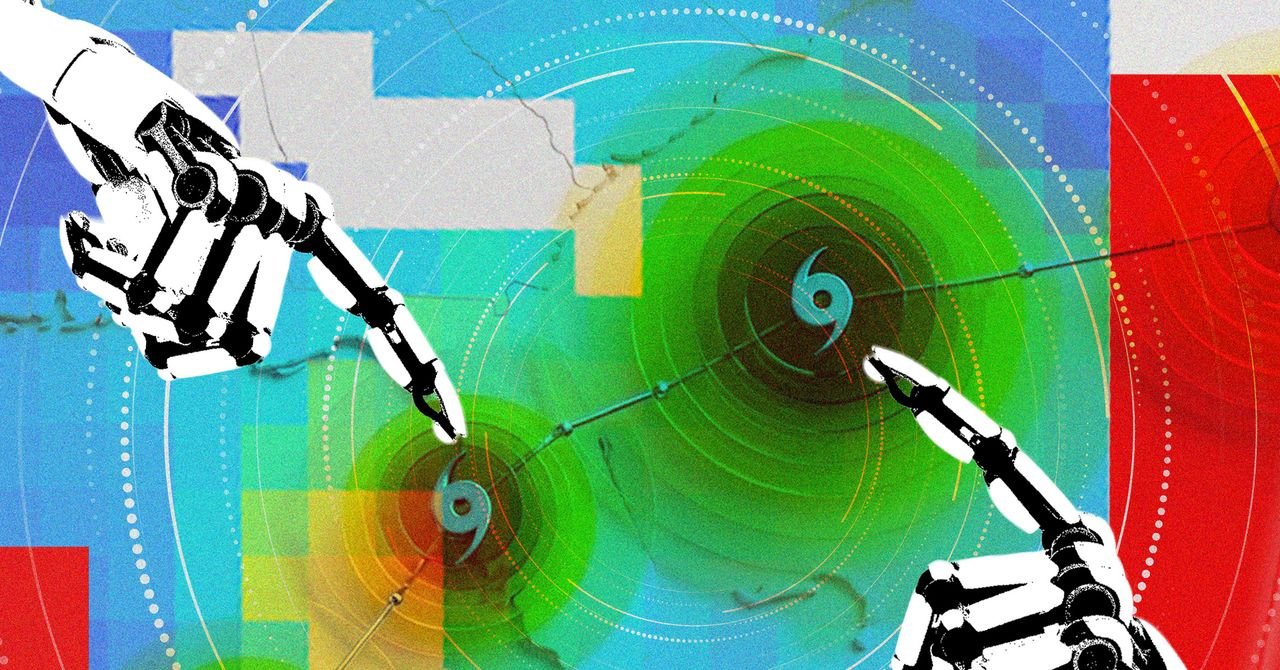
WeatherNext warns of hurricanes a day earlier.
Anthropic confirmed it is forming an in-house silicon team to design dedicated hardware for Claude, joining OpenAI in trying to reduce dependence on Nvidia.
Frontier model companies are collectively "making heavy bets on chips", driven by the same compute anxiety: the lifelines of training and inference sit in someone else's hands, and both the ceiling and the bill are set by others. Building in-house does not guarantee cheaper, but it claws back some control over "whether we get access at all".
As model outcomes hinge more and more on compute, making your own chips has become the most expensive insurance policy a top company can buy.

Anthropic to build its own chips.
AMD announced the acquisition of AI inference chip startup Taalas; terms undisclosed. Taalas' core approach is etching a specific model directly into custom silicon, letting hardware grow around the model.
Taalas was founded in Toronto in 2023; co-founder Ljubisa Bajic is the former Tenstorrent CEO. The company says its HC1 chip reaches 17K tokens per second per user on Llama 3.1, with efficiency gains up to 1000x from baking models into silicon. It closed a $169M round just this February.
AINews flagged Taalas as one to watch back in its Custom ASIC Thesis, and predicted vertical integration in Inference Inflection; the Baseten episode poured cold water on "etching LLMs". Lisa Su is clearly betting the other way. For AMD, this adds the missing piece of "building dedicated silicon for specific models" onto general-purpose GPUs. Buying Taalas amounts to admitting the inference market's deciding factor is not general compute but specialized silicon.
When inference cost becomes the deciding factor and chipmakers start building hardware around individual models, the general-purpose GPU moat gets dismantled by its own side for the first time.
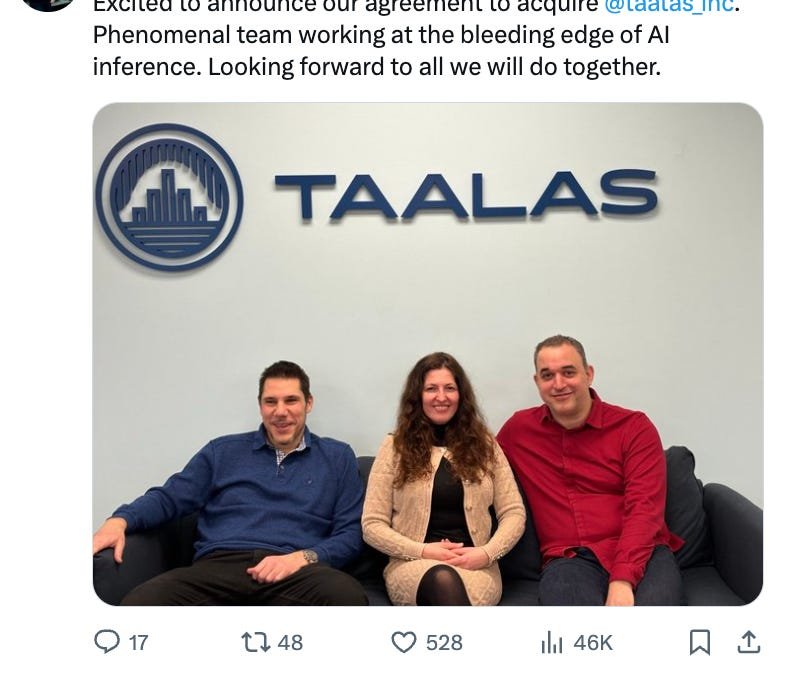
AMD acquires Taalas.
Meta's internally trained Muse Spark series took gold-level results across five STEM Olympiads, beating on both price and performance in Vals evaluations, jumping from unranked straight into the top five.
On the Vals Index, Muse Spark 1.2 costs $0.69 per test, about 3x cheaper than Kimi and more than 10x cheaper than Fable, Opus and 5.6 Sol. It is also the first model to break 60% on Finance Agent v2, at $0.77 per test versus former leader Opus 5's $5.12, twice as fast. One-seventh the price, with scores still above the closed-source leader. On the Olympiad side: perfect scores in APhO and IPhO theory, gold-level in IMO, IChO and RMM, all without tools: no search, no code, no calculator. Meta attributed part of the results to multi-agent parallel reasoning orchestration.
François Chollet criticized it as a "symbol sandwich" rather than an end-to-end neural program; supporters argue that four variables together, model quality, orchestration, pricing and service capability, decide adoption. This round was not one model dueling; a whole system went to war. Whoever assembles the quartet takes gold medals and sells at cabbage prices.
When tests run 7 times cheaper and still take gold, the "performance premium" of expensive closed models gets publicly punctured for the first time.
Muse Spark 1.2 takes five Olympiad golds.
Meta launched the Muse Code terminal coding agent, powered by the new Muse Spark 1.2 model, positioned as "able to handle complex tasks inside complex software".
Its selling point is not writing one line of code but understanding a whole large codebase: planning changes, editing across files, running tests to verify, breaking "change the code" into a revertible process. For ordinary developers, such tools cut the startup cost of "taking over an unfamiliar project"; among this week's open tools it is the closest to "usable out of the box".
Coding agents' competition has moved from "writing one correct snippet" to "reading an entire codebase".
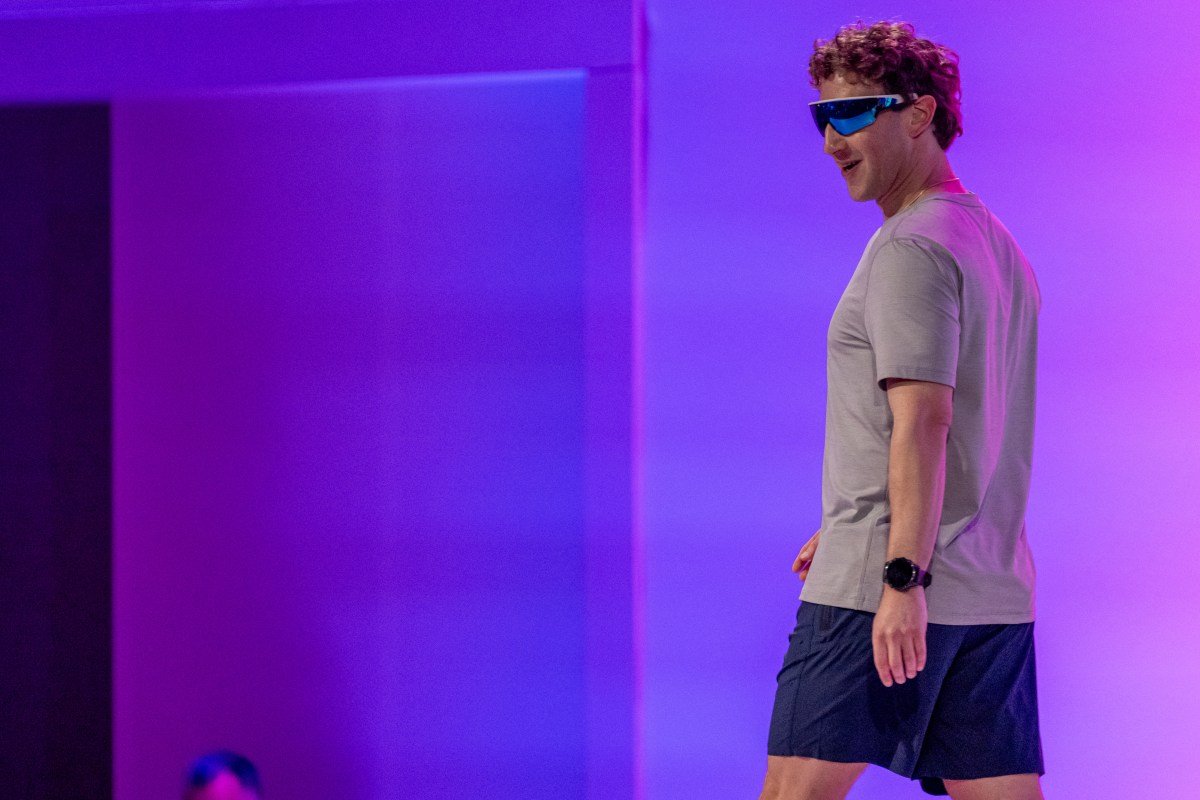
Meta releases Muse Code for large codebases.
"For decisions like warnings, time is precious. Gaining one extra day of forecast skill is absolutely worth it."
— Mike Brennan · Director, US National Hurricane Center · WIRED 08-06
"Hurricane data is scarce, but weather data is abundant, so we simply had the model learn both at once."
— Ferran Alet · Google DeepMind research scientist · WIRED 08-06
"We no longer live in a world where humans are the only strategic players."
— Adele Lopez · AI researcher · The Verge 08-06
Ant Group open-sourced Avernet, multi-agent collaboration infrastructure; the community edition is live. The goal: organize multiple agents to divide labor and work like company departments.
Single-agent capability has plateaued, and the industry is searching for "how to make a group of agents work together". Avernet's answer is to give agents an "org chart": who leads, who executes, who reviews, writing collaboration rules into infrastructure instead of everyone rolling their own. For ordinary people, it means complex tasks no longer hinge on one all-powerful agent, but on a team of agents dividing the work.
From "one agent does it all" to "a team of agents assembles": multi-agent is moving from papers to usable infrastructure.
Cloudflare launched Kitesurf, a cloud browser designed for AI agents rather than humans, running in the V8 isolation of Cloudflare Workers, letting agents complete web tasks with less compute.
Traditional browsers are designed for human eyes; Kitesurf is designed for agents' "tasks": stateless, cloud-hosted, each agent instance isolated, turning "let the model browse and work by itself" into hosted infrastructure. For ordinary people, it means AI booking tickets, comparing prices and filling forms is moving from demo to backed service.
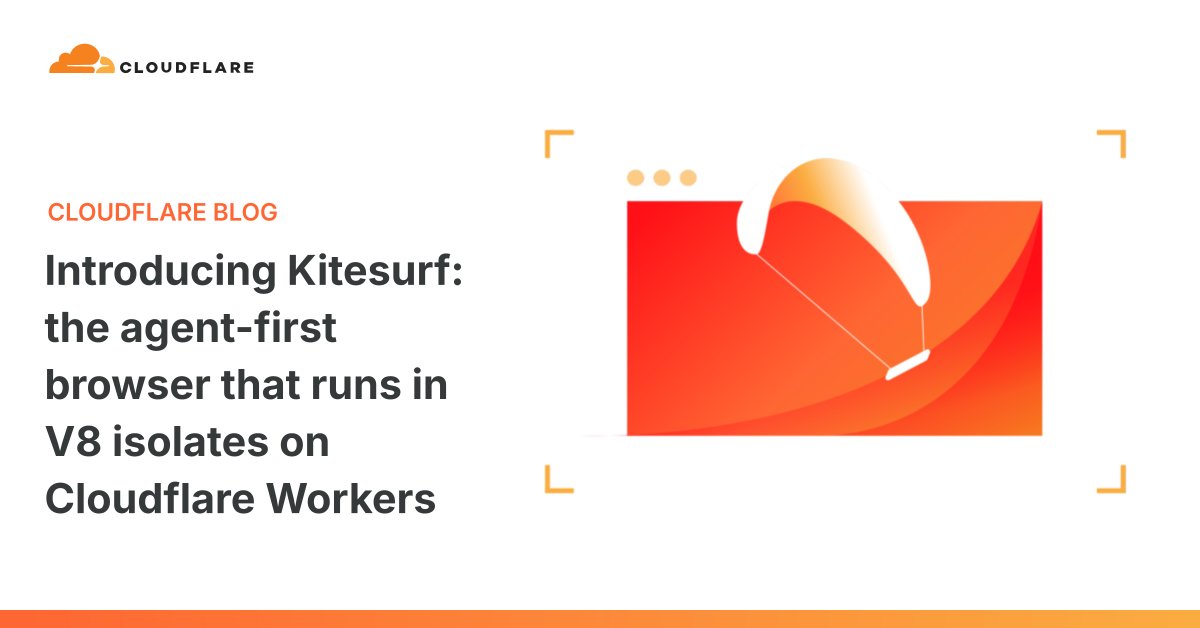
Cloudflare Kitesurf · official image · browser architecture for AI agents
When browsers stop serving only human eyes, the cast of characters online gains a new kind of "person" for the first time.
Naïve, founded by ex-Spotify employees pushing "vibe coding" one step further, raised $28.5M to automate the grunt work of setting up and operating a company.
It goes one step past vibe coding: not just generating code, but taking over incorporation, compliance and finance, the tedious processes of starting up. The imaginative space for such tools: letting "one person plus AI" extend from building products to building companies, lowering the barrier to entrepreneurship another notch.
Code can be vibed now; the company itself is heading in the vibe direction too.
Diagram of Naïve's logistics automation agent.
OpenAI paused Astra over safety standards: ask whether safety passes before capability crosses the line.
ByteDance trains a 10-trillion-parameter model, challenging Anthropic head-on.
Google WeatherNext made Nature: AI extends hurricane warnings by a day, and the model will be open-sourced.
Anthropic forms an in-house silicon team, reducing dependence on Nvidia.
Meta ships Muse Code, Ant open-sources Avernet, and multi-agents start assembling into teams.
This summer's theme is not who is stronger but who understands boundaries better: the model's boundaries, and people's.
Lake Naivasha, Kenya — NASA's satellite captured rising waters swamping the shoreline vegetation, the lake surface like an expanding mirror.
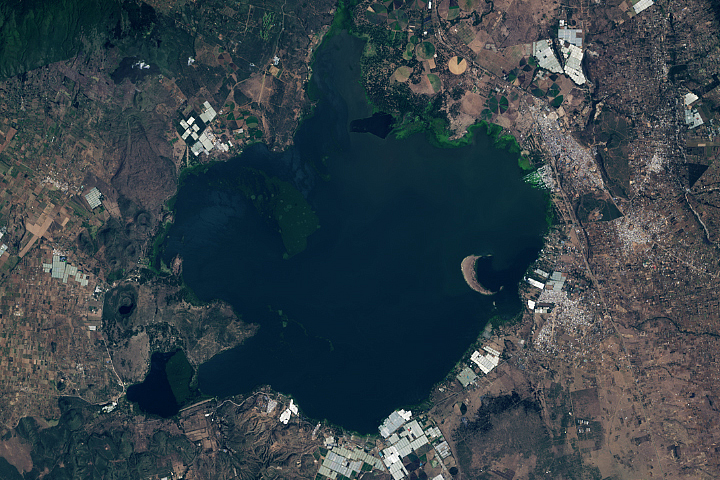
Lake Naivasha · Kenya · photographed by NASA · 0.7°S, 36.3°E
Rising waters have swallowed the shore plants, the lake like a mirror growing outward. While we argue on screens about whether models can hold their boundaries, this lake pushes its shoreline out inch by inch at the rhythm of the rains. After a day of AI news, Earth still has places that need no GPU cooling. Mountains and seas — stay curious, keep exploring.