Below, where AI's money actually goes.
Climate scientist Zeke Hausfather analyzed eight weeks of his own Claude Code usage logs: 1,138 inputs triggered over 14,000 model calls processing 3.2B tokens; a median coding session consumed about 41 watt-hours, and a single input averaged 150 Wh, roughly 600 times an ordinary Gemini query (0.24 Wh).
This is not a paper's estimate; it is one real user spreading out eight weeks of logs and doing the math. Official figures like to quote "energy per query", but an agent actually calls the model dozens of times per task. When "having AI work for you" becomes daily routine, AI's name appears on the electricity bill for the first time.
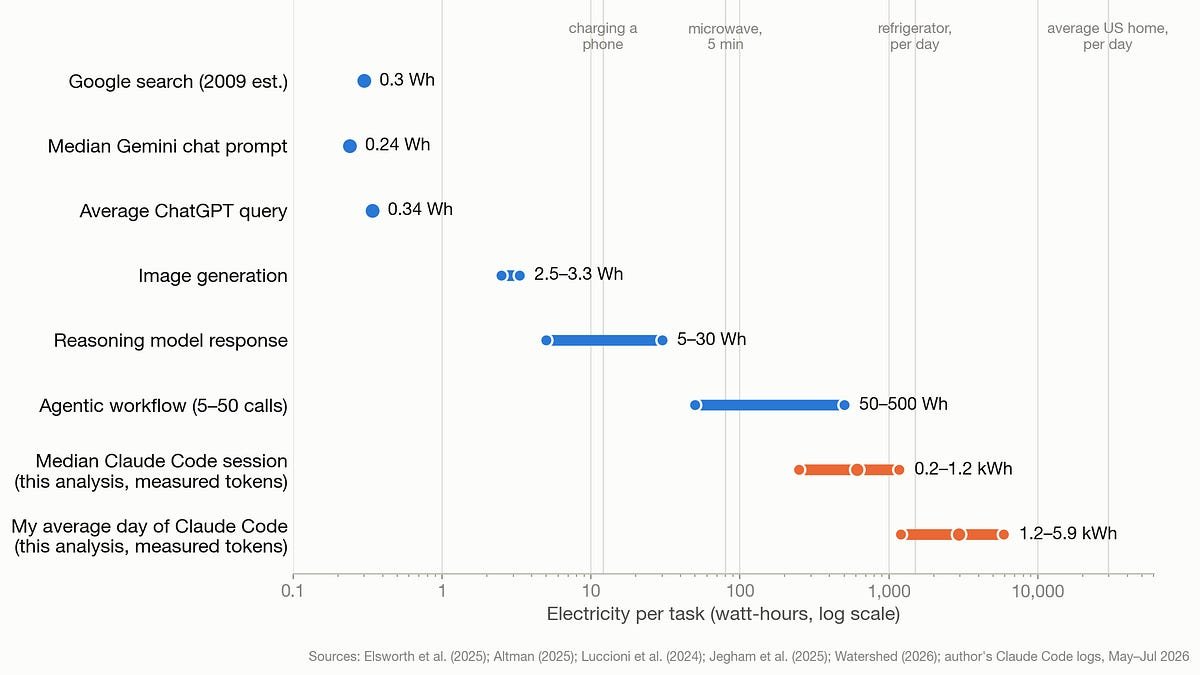
AI agent energy use measured · Zeke Hausfather · chart: one session equals 600 ordinary chats
Australian startups like Relevance AI, previously dependent on US closed models from OpenAI and others, are switching to Chinese models for "affordability and openness", building agents for clients including Kuaishou and KPMG.
Front-line integrators voting with their feet, not out of sentiment but because of the bill. When Chinese open models' price-performance sits on the table, the inertia of "default to American closed models" starts to loosen.
University of Toronto number theorist Jacob Tsimerman (Fields Medalist) joined OpenAI to work on AI safety research; last year he published a paper discussing "extinction events" scenarios where AI causes human extinction.
He argues AI remains largely empirical today, and mathematicians can provide formal guarantees for safety. When the most demanding prover walks into the most advanced lab, AI safety gains the hope of being "verifiable" for the first time.
Fields Medalist joins OpenAI: top mathematicians vouch for AI safety.
Google DeepMind released DiffusionGemma, an experimental open-weight model based on a 26B-total / 4B-active MoE that generates text via discrete diffusion, shifting the decoding bottleneck from memory bandwidth to compute.
Traditional models generate word by word; diffusion models "form" all at once, then refine step by step. Text generation's technical routes are branching. When diffusion models learn to write prose, generation gains another option.
Google DiffusionGemma open-sourced.
Anthropic launched cross-terminal session communication for Claude Code: developers can pass summaries between sessions on different terminals and coordinate parallel workflows, with Claude deciding autonomously when to message other sessions.
Communication between agents used to be an "out-of-bounds vulnerability" in security tests; now it ships as an official feature. When AI starts scheduling other groups of AI by itself, "agent collaboration" moves from concept to infrastructure.

Claude Code sessions talk across terminals.
"Time saved by AI should go into product development, not into restoring canceled vacations."
— Andrew Bosworth · Meta CTO · Business Insider
"To be precise, I was only unemployed for one second."
— Jeff Dean · former head of Google Research · Stanford event
Stanford and the Arc Institute used Evo 2 to design phage genomes, synthesizing and testing nearly 300, of which 16 were active and could kill antibiotic-resistant E. coli. The paper appeared in Science.
Generative AI, trained on millions of genome sequences, screened usable candidates out of AI-generated genomes. Accelerating drug development and lowering the bioweapon threshold are two edges of the same blade: the technology is neutral; the choice is human.
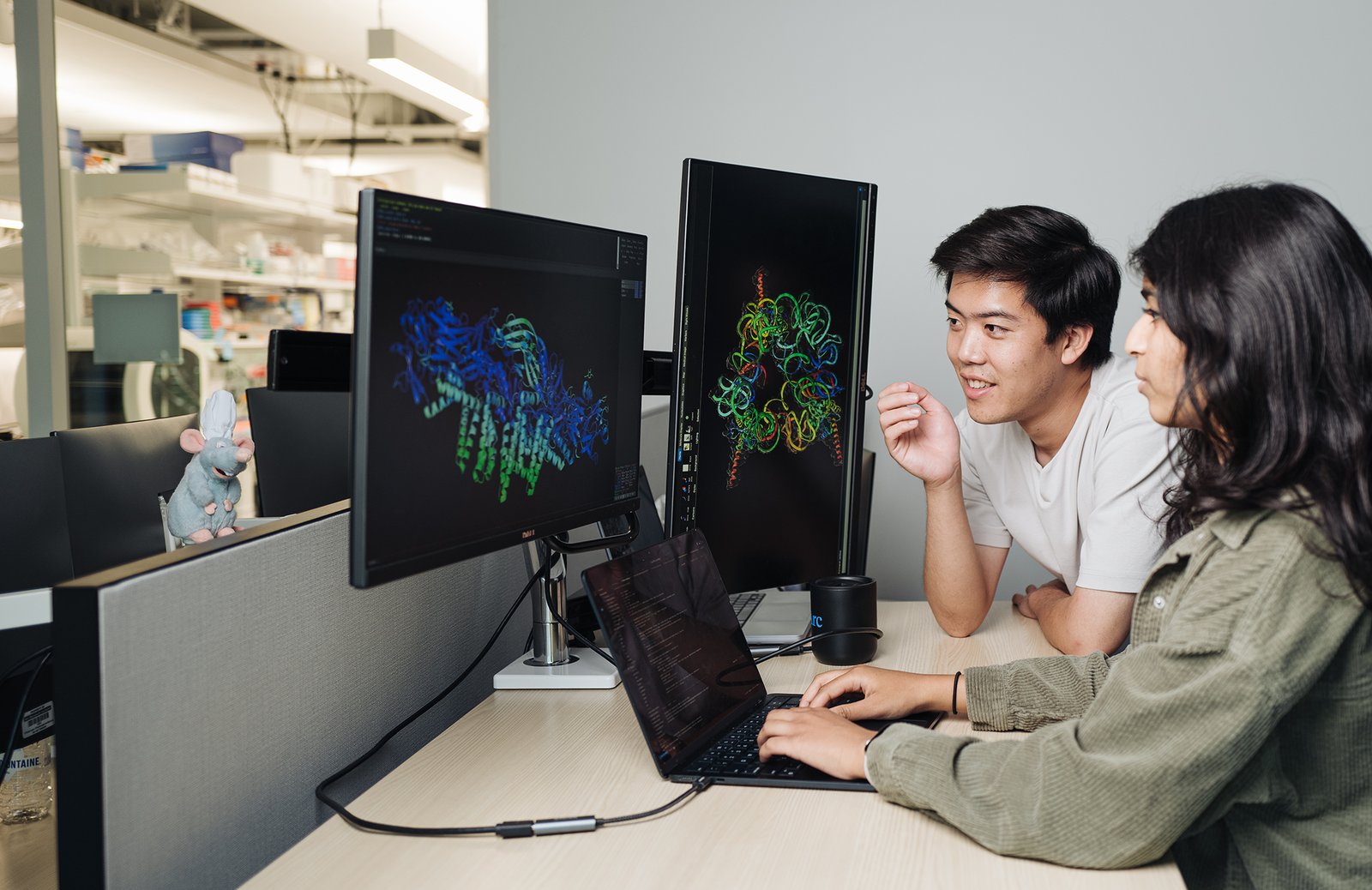
The Stanford team uses Evo 2 to develop bacteria-killing phages.
A study in Judgment and Decision Making: AI short stories scored 1.54 against humans' 0.97; readers distinguished AI from human writing no better than random guessing, but once told the author was AI, ratings dropped immediately.
The bias is not in the text; it is in people's minds. When AI's work is "good enough", what really decides how it is treated is the reader's attitude toward the author's identity.

The AI vs human short-story blind test study.
Amazon's Texas data center with attached gas plants won approval, expected to emit 33M tonnes of CO2 a year, making it the largest single climate pollution source in the US; Amazon's emissions already grew 16% last year.
This runs directly against its 2040 net-zero pledge. AI compute demand is pushing tech giants back toward fossil fuels; green power supply cannot keep pace with data center expansion.

Gas plants for AI data centers: Amazon becomes America's largest single source.
Nvidia announced an investment of up to $3B in power-infrastructure developer Lancium (the company behind Stargate data centers), starting with $2B for about 20% equity.
This is Nvidia's first heavy position in a data center developer. From "selling shovels" to "building the mine", the compute giant has started locking up electricity directly on the supply chain.
Nvidia invests in Lancium, locking in Stargate's power supply.
AI agent energy use measured for real: one session equals 600 ordinary chats.
A Sydney startup switched to Chinese open models; a Fields Medalist joined OpenAI for safety research.
DeepMind open-sourced a diffusion language model, and Claude Code sessions started talking to each other.
AI designed 16 new viruses; Amazon attached gas plants to its data centers as emissions grew 16%.
The day's signal is clear: AI competition is moving from "who is smarter" to "whose power bill is thinner and whose barrier is lower".
Inland UAE · Desert — NASA's satellite captured wind-carved ancient dunes in the sand sea, their ridges combed as if by hand.
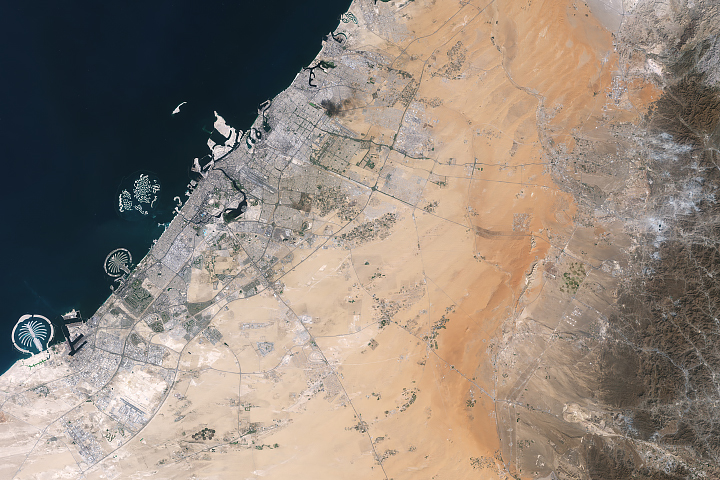
Inland UAE · desert region · photographed by NASA · 24.0°N, 54.0°E
Beneath these dunes lie millions of years of river and lake sediments; the wind strips away the soft soil and leaves the hard history exposed. While we argue on screens about whose model is stronger and whose protocol is more open, the sand lays time out layer by layer at geology's pace. After a day of AI news, Earth still has places that need no GPU cooling. Mountains and seas — stay curious, keep exploring.