Below, who is grabbing what.
Unitree opened its IPO subscription today at 150.80 yuan per share, implying a market cap of about 61B yuan, aiming to raise about 6.1B; the issue P/E ratio is 219x. In the strategic placement sit the social security fund and DeepSeek.
The story is bigger than "first humanoid robot stock". Unitree's revenue grew from 159M yuan in 2023 to 1.699B in 2025, with first profit of 278M in 2025, and nearly half the raise goes to AI model research, not capacity. A robot company weighting its fundraising toward "software and models" over "factories" is a first on A-shares.
When robot valuations pivot from "building hardware" to "feeding models", A-shares' first humanoid stock is really pricing the whole track.
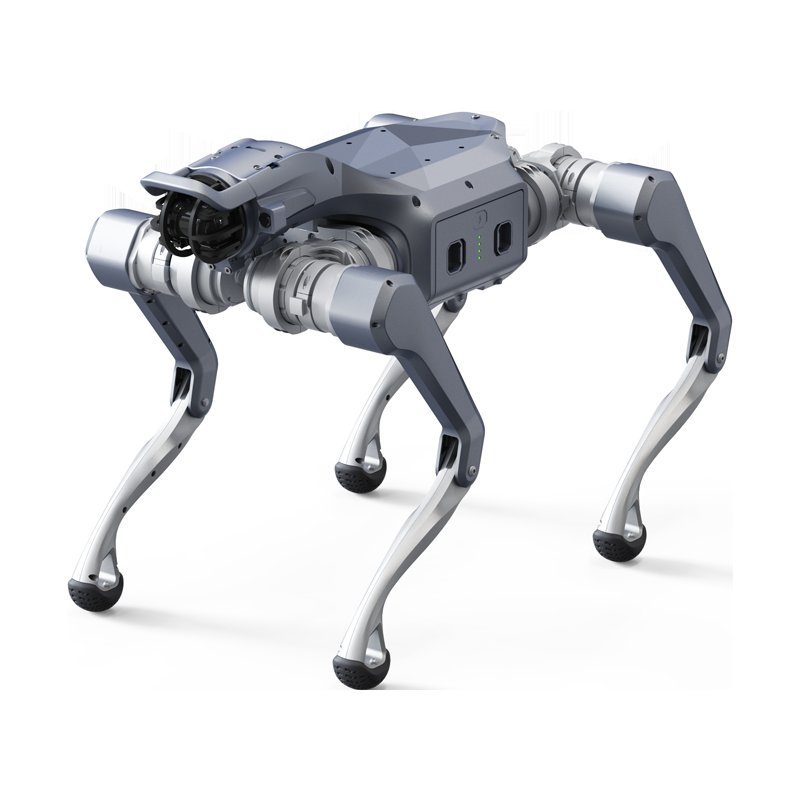
Unitree · official product image · a humanoid robot on A-shares
From today OpenAI removed text-conversation limits for free and Go accounts, switched free users to the smaller GPT-5.6 Luna, and added a "Think" button for deeper replies.
Image generation, file uploads and voice keep separate quotas. Making the most common use case, text chat, unlimited aims at the "open it every day" habit. The entrance war has moved from model capability to cost of use.
ChatGPT free tier: unlimited text chat.
Anthropic engineer Boris Cherny said model training has largely resolved Claude's real-world prompt-injection threat; independent benchmarks show that with layered defenses, unseen indirect-injection attacks approach a 0% success rate.
Claude Code's autonomous mode also turns on by default next week. Prompt injection is one of the main obstacles to "letting agents out to work"; as this gate loosens, enterprise hesitation shortens.

Diagram of Anthropic's prompt-injection defense evaluation.
A new worry is circulating: when AI eats junior roles first, newcomers lose the ground to practice on, nobody learns fundamentals hands-on anymore, and the industry's accumulation of know-how starts to break.
It has been called a tragedy of the cognitive commons: everyone benefits from an environment where newcomers keep arriving, yet every company individually finds "deploy AI first" cheapest. The costs AI saves may be overdrawing the whole industry's future fundamentals.
Per The Information, SpaceX's acquisition of AI coding tool Cursor is close to closing: a $6B all-stock deal, possibly done this weekend; the Cursor brand will gradually retire, and its general-agent product codenamed Sand may fold into the Grok family.
Musk is building Starlink while folding "the AI that writes code" into his own orbit. When a rocket maker starts acquiring coding agents, the second half of AI coding is fought over the whole chain, not single tools.

Cursor editor acquired by SpaceX.
The first fully domestically built 100K-card AI super cluster is officially live, sited in the Greater Bay Area hub of the "east data west compute" project, targeting trillion-parameter domestic model training.
100K domestic cards stitched together: the compute foundation of "not being strangled" takes real shape for the first time. When training trillion-parameter models no longer depends on others, the next stop for Chinese models shifts from "can we train" to "how fast".
The first fully domestic 100K-card AI super cluster.
Simon Willison noted that GitHub Models has completed its retirement: the model playground and the unified API across LLM providers are formally closed.
The service once let code in GitHub Actions call any provider's models with in-environment API keys. Its closure reads as a signal: how developers reach models has moved from "platforms build bridges" to "bring your own quota and connect directly".
GitHub Models formally retired.
Simon Willison experimented with compressing text revision histories via zlib/zstd into JSON arrays stored in SQLite, letting apps keep full history at low cost.
When AI apps must "remember" every state along the way, storage explodes. This prototype asks how to make "full history" cheap. The cost of AI remembering everything is turning from a storage problem into a compression-algorithm problem.

SQLite revision-history compression experiment.
"Prompt injection is the most common way scammers attack users and agents: your agent visits a website, and malicious text inside makes it send out your keys."
— Boris Cherny · Anthropic engineer · Anthropic
"DeepSeek V4 Flash substantially beats Nemotron3 Ultra on agentic tasks, with 4.2 times fewer active parameters."
— SemiAnalysis · Chip industry analysis · SemiAnalysis
"I once felt my life's mission had lost its meaning. But look now: AI has not killed programming; engineers have just moved from the keyboard to the whiteboard."
— Amjad Masad · Replit CEO · Casey Newton podcast
xAI released Grok Imagine Image 2.0 as a new quality mode on Grok web, adding regional editing, background removal and Smart Resize, supporting up to 5 reference images.
The last generation competed on "how pretty"; this one competes on "can you edit it precisely". Image models' competitive point is shifting from "one-shot generation" to "controllable editing".

Grok Imagine Image 2.0 goes live.
KBS visited Japanese auto development: one sentence, "flash the hazard lights three times when the door opens", and AI wrote the automotive-grade program in three and a half minutes; validation scenarios numbering 40K compressed from days to 8 hours.
What deserves even more attention: parts suppliers are filming skilled workers' hand movements to accumulate training data for "physical AI". When the masters' craft becomes parameters inside a model, Japan's core manufacturing asset is migrating from human brains into data.
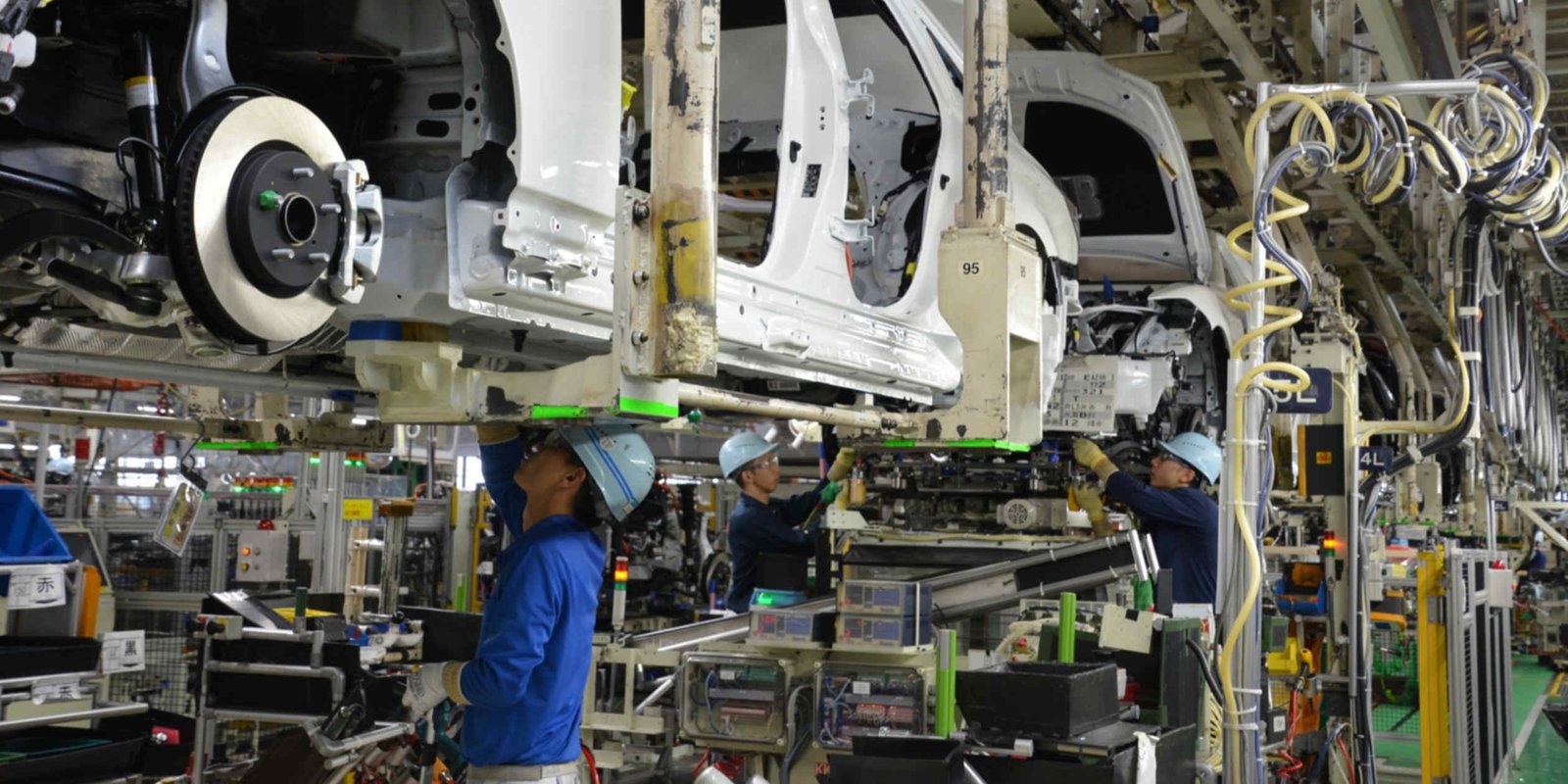
Japanese automakers use AI to write automotive-grade programs.
From Claude Code's autonomous mode to multi-agent collaboration, the agents of summer 2026 no longer just "chat"; they genuinely "read" data, call tools and fix their own code.
Meta's EvoHarness-RL lets agents learn tool orchestration on their own; behind GitHub Models' retirement, developers grow used to bringing their own models and connecting directly. When AI evolves from "answering questions" to "doing the work itself", what becomes truly scarce is someone to draw its boundaries.
The agent feedback observation loop.
AI hedge fund Situational Awareness invested $400M in chip startup Source Foundry this week, bringing its total to $500M. The startup, founded by Stanford researchers, aims to make chip manufacturing faster and cheaper.
Last month the fund sold most of its public holdings to Citadel, shrinking assets under management from $20B to $10B. It sold the portfolio yet still heavy-bets on chips. AI money is moving from "buying listed compute" to "backing silicon that has not left the factory".

Situational Awareness invests in Source Foundry, locking in chip newcomers.
Unitree opened subscriptions today, bringing A-shares their first humanoid robot stock; SpaceX paid $6B for Cursor.
The first fully domestic 100K-card cluster went live; OpenAI lifted free-tier limits and Anthropic solved prompt injection.
AI cutting entry jobs raises a "tragedy of the cognitive commons"; Japanese carmakers turn master craftsmen into data; GitHub Models retires while a hedge fund bets on chips.
On this day capital bought robots, coding tools and compute foundations. In AI's 2026, whoever holds "assets" holds the next ticket in.
The Andes, Patagonia, Chile — NASA's satellite captured a long white ridge flickering in cloud shadow, quieter than any model benchmark.

Snow in the Shadow of the Andes · Chile · photographed by NASA · 45.0°S, 72.0°W
The white ridge brightens and dims under moving clouds; the snowline falls and melts at its own rhythm, indifferent to benchmarks. While we argue on screens about whose model is stronger and whose agent is more obedient, this mountain governs the water and wind below on a timescale of tens of millions of years. After a day of AI news, Earth still has places that need no GPU cooling. Mountains and seas — stay curious, keep exploring.