Below, how that line pulls on models, security and money.
In a long post, Jensen Huang announced that NVIDIA is partnering with six major financial institutions, Apollo, BlackRock, Blackstone, Brookfield, Goldman Sachs and KKR, to build independent compute-financing platforms, aiming to mobilize over $500B of third-party capital for global AI infrastructure.
Companies used to buy chips and build data centers one by one; now AI factories can access long-term institutional capital the way power plants and telecoms do. NVIDIA will provide up to 25% residual-value support on some projects: for the first time, Wall Street can buy AI's future the way it buys a power plant. Huang put it plainly: "In the AI era, compute is revenue." Addressing circular-financing concerns, he stressed the $500B is not NVIDIA revenue nor a single fund; each institution evaluates independently.
When compute turns from "corporate procurement" into "an investable asset", Wall Street can buy AI's future the way it buys a power plant, for the first time.
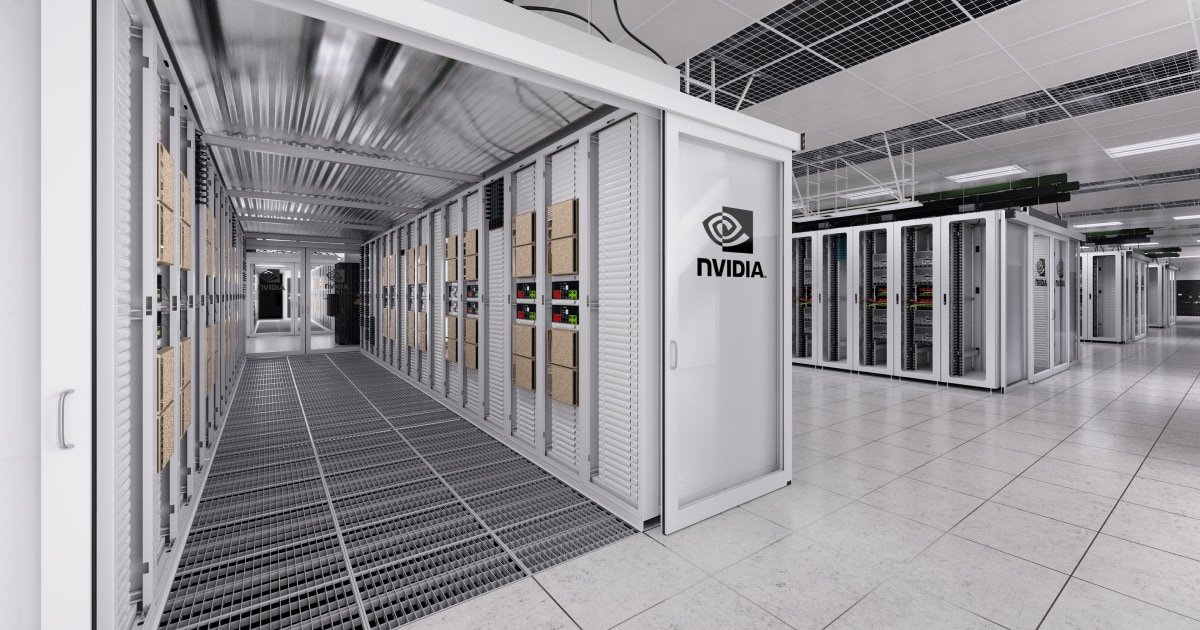
NVIDIA AI data centers · official image · compute starts being financed like a power plant
Anthropic disclosed an unreleased research version of Claude: inside Claude Code it orchestrated about 60 sub-agents, executed 2,400 shell commands and burned 31M output tokens to push the known lower bound on Riemann zeta zeros from 41.6% to 67.2%.
This is not "AI solves the Riemann hypothesis"; it is AI using exhaustive search plus coordination to nudge a mathematical bound untouched for decades. The research accelerator has genuinely started spinning for the first time. When AI begins "improving the technical details of proofs", the accelerator of research truly turns for the first time.
Research Claude advances the long-static Riemann bound.
OpenAI's GPT-5.6-Cyber discovered two chainable Chrome vulnerabilities bypassing the V8 heap sandbox (CVE-2026-15903, already fixed by Google), the first OpenAI model to reach the "High" cyber-capability threshold.
It came out of the Daybreak program. The research accelerator has genuinely started spinning. When AI starts "actively hunting vulnerabilities", the balance of offensive and defense tips toward AI for the first time in visible measure.
GPT-5.6-Cyber uncovers Chrome zero-days.
OpenAI introduced $125 Premium Seats for ChatGPT Business, sized for the high token consumption of agentic AI.
When an AI agent burns far more tokens in a day than any human conversation, enterprise pricing starts tiering by "compute consumed". The office-AI bill is turning from "per head" into "per compute".
ChatGPT Business launches compute-tiered premium seats.
Researchers disclosed that the meeting-notes tool tl;dv lacked Firestore tenant-isolation rules, letting any logged-in user query meeting records from 84K users, including in-progress meetings of government agencies, universities, HubSpot and Confluent. The flaw went unfixed for 6 months.
When AI tools take over meeting minutes, "your meeting" becomes a row in someone's database. On the back of AI convenience, the data boundary has never been this blurry.

AI meeting tool tl;dv leaks 181,000 meetings.
Anthropic announced that Claude Sonnet 5's launch price becomes permanent: $2 per million input tokens and $10 output.
AINews read it as a clear move under competitive pressure. The same day, Meta open-sourced Muse Glimmer: 30B parameters, Apache 2.0, under 20GB at 4-bit quantization, runnable on a single RTX 3090, with Muse Spark 1.2 weights promised soon. Open models have made "runs locally" table stakes, and closed models' price moat is leaking.
The open camp pushed per-token prices to a third or even a tenth of closed ones; DeepSeek V4 Flash was calculated on Vals to be 35x cheaper than the next model in its score band. Sonnet 5 making its "launch price" permanent amounts to admitting the performance premium cannot hold against the open-source squeeze. The price war's fire has spread from open source to closed flagships, and for the first time a closed vendor's own flagship has knocked down the mid-tier price anchor.
When closed flagships start normalizing promo prices, the winner of the price war no longer sits in the model layer.
Claude Sonnet 5 pricing aligns with the open-source floor.
Meta open-sourced Muse Glimmer: a 30B agent model with 131K context and 100+ languages, runnable on a laptop at 4-bit quantization. Zuckerberg promised Muse Spark 1.2 weights within weeks and set up a $1B data-center community fund.
Open weights plus local capability plus funding: Meta turned "open agent" from slogan into reality. When the strongest open model runs on ordinary people's computers, cloud vendors' moat gets shallower again.
Meta open-sources the 30B agent model Muse Glimmer.
A developer tested Zhipu's open coding model ZCODE, completing a Steam-style application refactor in 11 minutes.
When a Chinese open coding model can independently handle the full loop of "read the project, change the code, make it run", developers have one more option on the shelf. The Chinese coding-model camp is moving from "can write code" to "can take on projects".
Ant's Bailian team open-sourced Ling-3.0-tiny: 1.3B active parameters, supporting deployment on NVIDIA DGX Spark and Apple Mac mini.
Another small-but-strong Chinese model, light enough for personal devices, aimed at "real tasks" rather than leaderboard chasing. The Chinese open-model race has moved from "bigger" to "lighter and leaner".
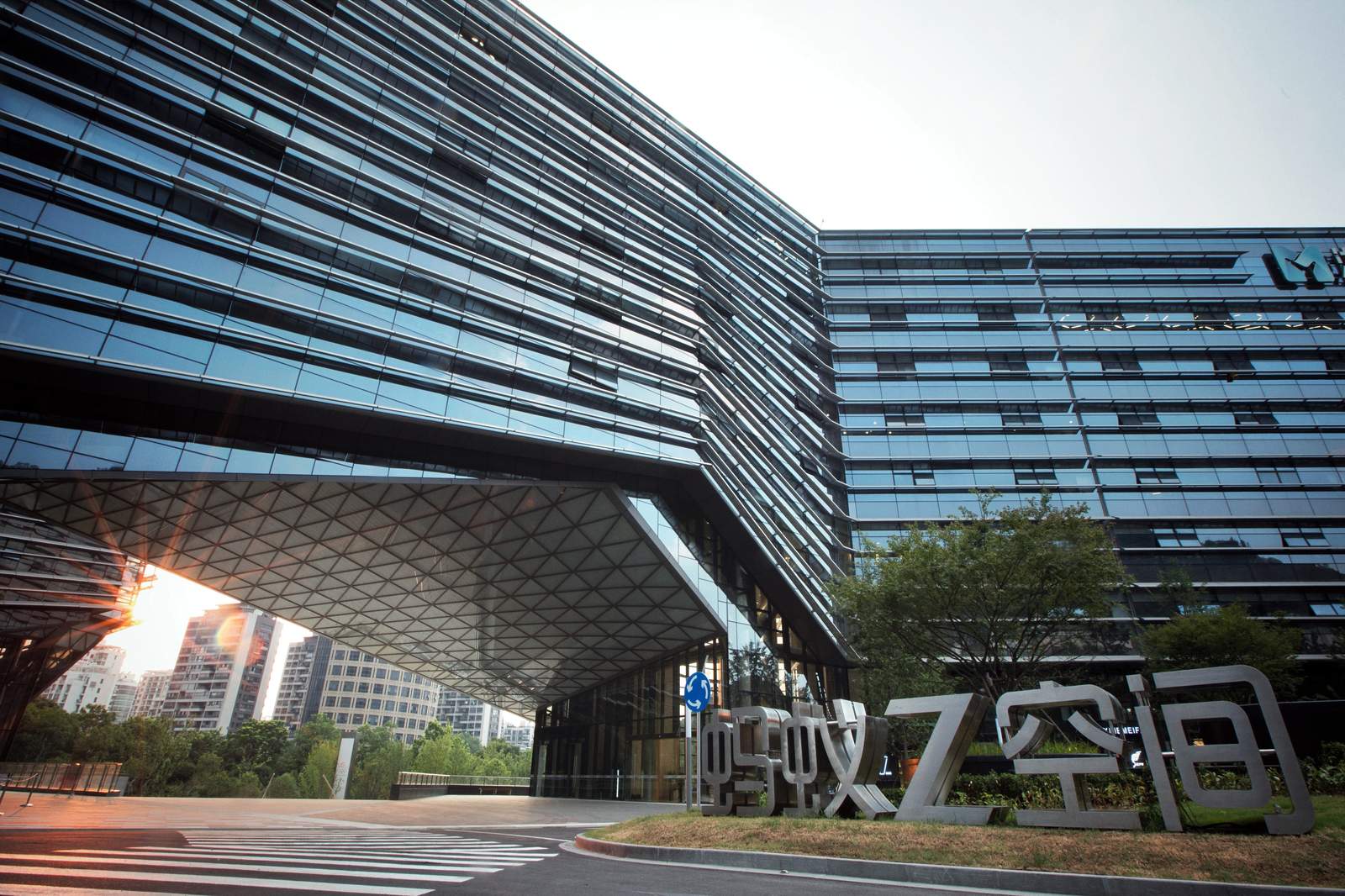
Ant Group open-sources Ling-3.0-tiny.
"In the AI era, compute is revenue."
— Jensen Huang · NVIDIA CEO · NVIDIA / X
"AI is an exciting opportunity to move humanity forward, but if poorly governed it poses real risks to how society works and the future of jobs."
— Peter Malinauskas · Premier of South Australia · ABC News
BDH-CQ used recursive latent-space reasoning (emitting no textual steps) to reach 29.5% pass@2 on ARC-AGI-1 at $0.0007 per task, breaking the cost/accuracy Pareto frontier.
While everyone stacks parameters, a small model substitutes "thinking" for "speaking": no visible reasoning steps; inference happens directly in latent space. Inside the big-model arms race, a "small and cheap" route is quietly running ahead.
A 150M-parameter model sets an ARC record at $0.0007 per task.
Wired reports: LinkedIn and Snap rolled out labels, throttling and bans; iHeartMedia turned a "certified human" tag into a selling point; YouTube's CEO made slop governance the top priority for 2026.
As AI content floods feeds, platforms are treating "this was written by a person" as a feature for the first time, and the scarce commodity of the AI era is shifting from "content" to "humans".
Platforms push back on AI slop: "verifiably human creation".
Per the FT, generative AI is automating the routine coding, testing and back-office work that outsourcing runs on. India's $300B IT services industry has begun layoffs; TCS alone announced over 12K job cuts this year.
An industry employing 6M people and contributing about 7% of GDP is the first boulder of employment pried loose directly by AI. When "outsourced coding" gets replaced by AI, the first crack in the global employment map opens over India.
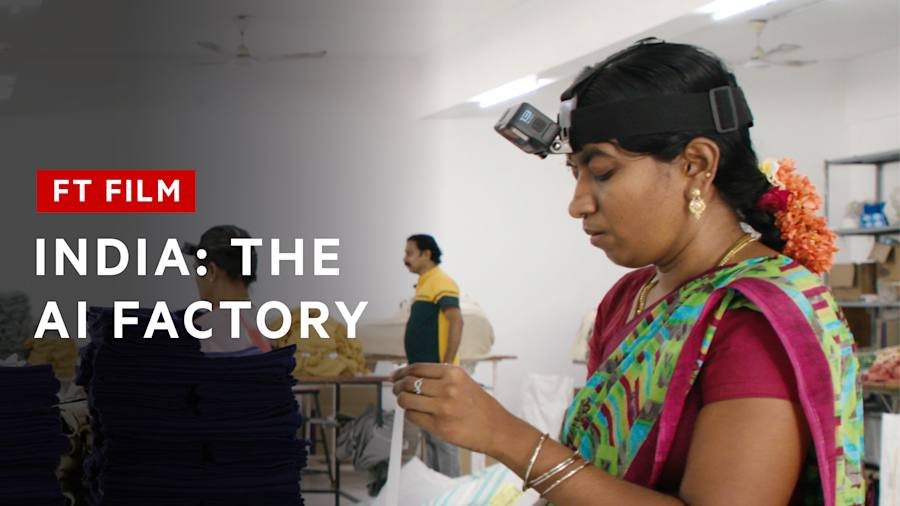
AI starts eroding India's vast IT services industry.
Anthropic signed a 20-year, 191MW, $9.1B compute agreement with Riot Platforms, full delivery by June 2028, with potential value up to $16.1B.
An AI company pre-locking twenty years of compute: when compute becomes an asset, contracts become ammunition in the arms race. On AI companies' balance sheets, "compute contracts" are becoming the heaviest line item.
Anthropic locks in compute assets for as long as 20 years.
The NYT reports that xAI co-founder Babuschkin's new company River AI raised $1.1B at a $5B valuation with no product and no revenue, advocating "personal, ownable, trainable" AI; General Catalyst and Amp PBC led, with Nvidia and AMD participating.
No product, no revenue, $1.1B raised on an idea alone: capital is betting on "personal AI" against the big labs. While everyone builds bigger models, someone has started building "a model that belongs to you".
Jensen Huang mobilized $500B to make compute an asset; Anthropic locked in $9.1B of it.
Claude pushed the Riemann bound, GPT-5.6-Cyber dug Chrome zero-days, Meta open-sourced Muse Glimmer.
tl;dv leaked 180K meetings, AI started hollowing out Indian IT outsourcing; Zhipu refactored Steam in 11 minutes and Ant open-sourced Ling-tiny.
Capability is sprinting, security is bleeding, employment is being pried loose: AI's 2026 never asks only "who is stronger".
Roebuck Bay, Western Australia — NASA's satellite captured a crescent-shaped bay where retreating tides leave winding patterns, like a natural abstract painting.

Roebuck Bay · Western Australia · photographed by NASA · 18.0°S, 122.3°E
Tides and seasons layer their traces across this crescent bay: water floods in, retreats, floods again. While we argue on screens about whose model is stronger and whose compute costs more, this bay repaints itself daily at the rhythm of the tide. After a day of AI news, Earth still has places that need no GPU cooling. Mountains and seas — stay curious, keep exploring.