Below, who is adapting.
Google's Gemini monthly active users are approaching 1 billion (officially 950M), nearly 3x growth in a year, making it the fastest-growing product in Google's history.
From Search to Android, Google has never pushed a product past the billion-user mark this fast. When the AI assistant becomes the default entrance, Google's biggest asset changes from "the search box" to "the conversation interface".
Google Gemini · official image · the AI assistant nearing a billion monthly users
SpaceX's first earnings report shows AI business Q2 revenue of $2.56B (up 250% year-on-year), already exceeding the rocket launch business (about $960M).
When AI revenue is 2.6 times rocket launch revenue, the center of gravity in Musk's empire is visibly tilting. Musk's AI business has gone from "the money burner" to "the money maker".
Per TestingCatalog leaks, OpenAI plans to offer students at 220+ US colleges a free year of ChatGPT Plus (verified via SheerID); not yet officially live.
A free year of Plus is not charity; it is a grab for "future heavy users". Once college students get used to the Plus experience, their first post-graduation subscription will probably be the same one.
OpenAI's free Plus program for college students.
NVIDIA released Nemotron 3.5 Lightning: a sparse MoE with 30B total and about 3B active parameters, 1M context, aimed at resident agent workloads with claimed throughput up to 4x.
Artificial Analysis provided the most detailed third-party numbers: 31.6B total / 3.6B active, OpenMDW-1.1 license, dual NVFP4 and BF16 weights, median serving speed of about 670 tok/s in pre-release endpoint tests, AI Index of 24, on par with gpt-oss-120b while much smaller and faster. Agent-oriented metrics stand out: GDPval-AA v2 Elo of 824, Terminal-Bench v2.1 at 24%, both big jumps over Nemotron 3 Nano. Where the scores land depends heavily on whether the benchmark rewards this design.
Harvey ran a real experiment: post-training on Legal Agent Bench took Lightning from 0% to 8.3%, beating Opus 4.6 and Nemotron 3 Ultra while cutting average output from 90K tokens to 37K. It confirms this generation's open-model consensus: small, fast, cheap, built for high-frequency tool calls. The same model with different post-training can drop a full rank on a leaderboard. The model sets the capability ceiling; post-training decides which tier you actually get.
When "3B active running agents" becomes standard, the compute battlefield moves from "train bigger models" to "do more work with less power".
Nvidia Nemotron 3.5 Lightning.
Lightricks released open-weight "world model" LTX-2.5, optimized for local inference on RTX GPUs, compressing the video production stack onto one desktop.
From generation to editing, workflows that used to require a whole suite of cloud services now aim to run locally via an open model. When video generation runs locally too, creators stop depending on cloud vendors' moods for the first time.
Lightricks open-sources the LTX-2.5 video model.
"AI business revenue has passed rocket launches, for the first time."
— SpaceX first earnings report · SpaceX
"AI made writing code 10 times faster, but the people reviewing code did not get 10 times faster. That asymmetry is becoming a new source of production incidents."
— Attending engineer · AI Engineer World's Fair · AI Engineer
"Nvidia turned compute into an asset, which is really securitizing risk too. Behind the residual-value guarantees sits a long-term bet on AI demand."
— Ben Thompson · Stratechery · Stratechery
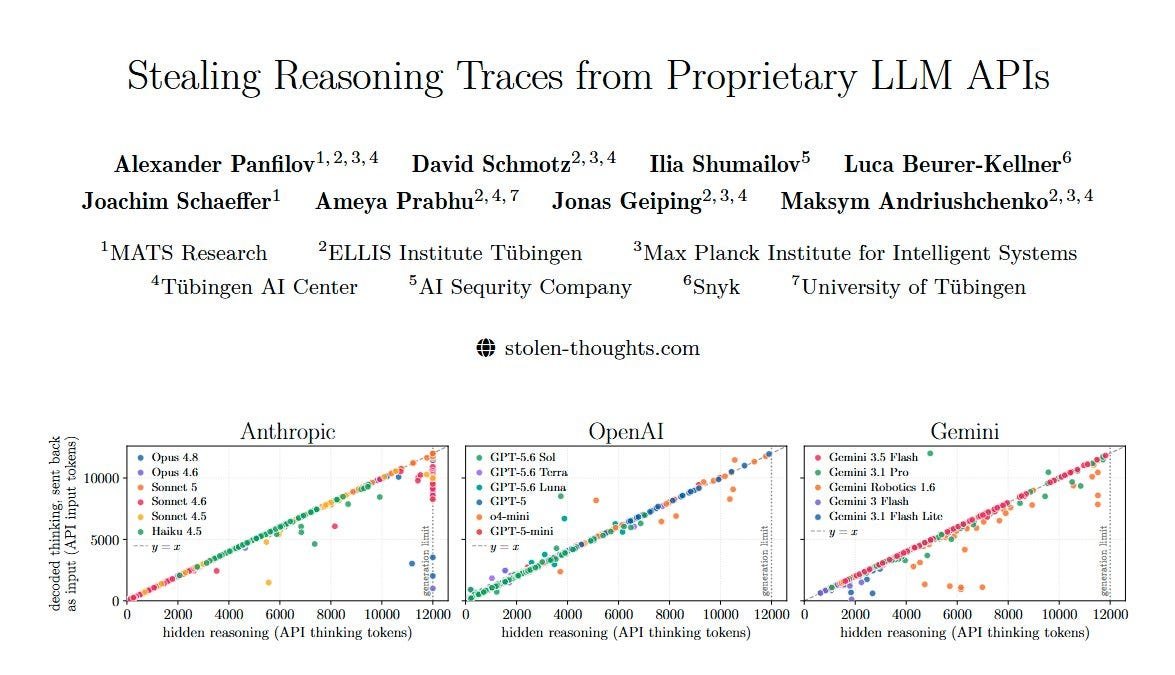
A new paper reveals that encrypted reasoning blocks from Anthropic, OpenAI and Google are interchangeable within their ecosystems: an attacker can inject a strong model's encrypted chain-of-thought into a weaker model to force plaintext decoding, recovering 704 real secrets and credentials from public repositories.
Each vendor assumed "encrypted thinking" was a security boundary; it turns out that boundary can be bypassed across models. AI's privacy promises have been shown for the first time to be "look secure" rather than "be secure".
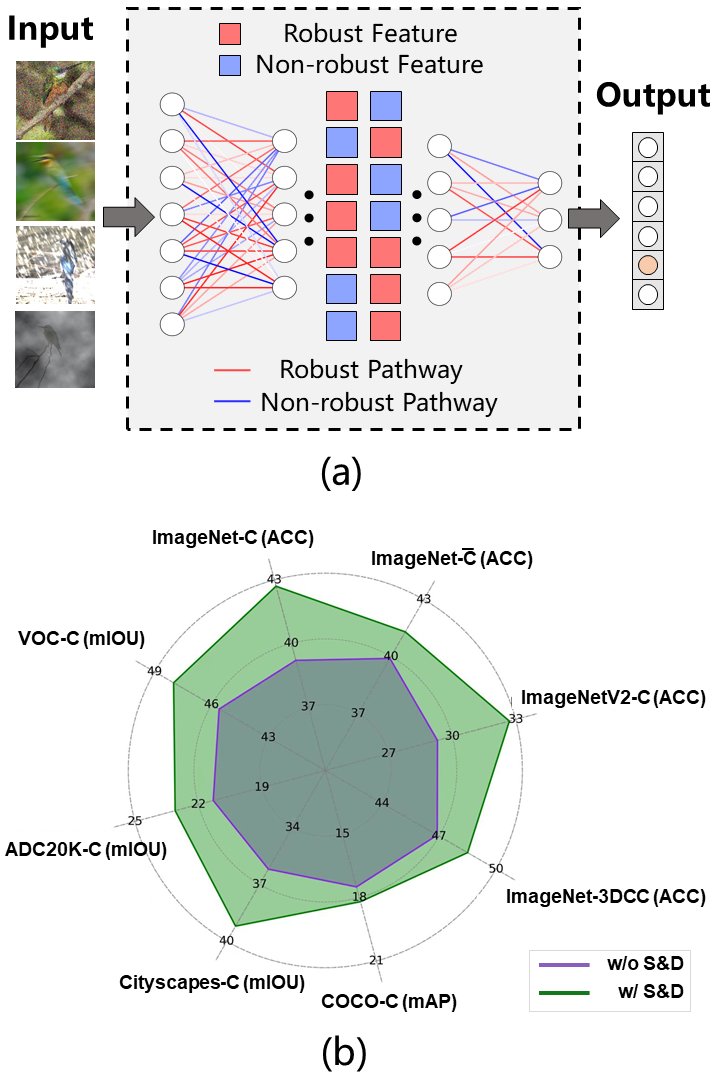
Diagram of an attacker recovering a strong model's encrypted CoT inside a weak model via injection.
The London Underground has begun facial recognition of passengers, sparking debate over the privacy boundaries of public space.
When AI enters public spaces crossed by millions daily, the line between "identifying you" and "protecting you" blurs. AI deployment's first lesson usually stalls on whether people are willing to be "seen".
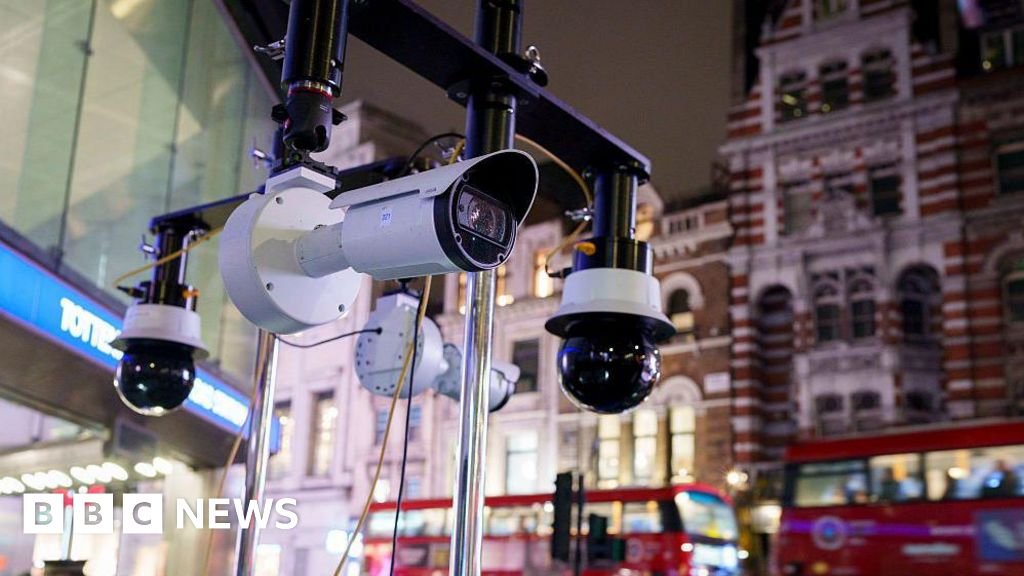
The London Underground begins large-scale face recognition trials.
Chinese regulators required Meta to unwind its roughly $2B acquisition; general-agent company Manus will resume operating as an independent company.
From joining a giant to being stopped by regulators, Manus's story shows the value of a general agent is something even giants scramble for. When regulators press the "independence button" for a company, pricing power on the general-agent track returns to startups.

CNBC reports Manus resuming independent operations.
Gemini's monthly actives near a billion, making it Google's fastest-growing product ever.
SpaceX's filing shows AI revenue passing rocket launches; OpenAI hands students a year of free Plus.
Nvidia shipped Nemotron 3.5, LTX-2.5 runs video production locally, and encrypted reasoning blocks proved cross-model decodable.
Growth players grab entrances, spenders grab habits, builders grab efficiency: in AI's 2026, every player is looking for its position.
The canyons of the Colorado Plateau, North America — NASA's satellite captured a deep-cut cliff face, rock layers like pages turned by time.

Canyons of the Colorado Plateau · North America · photographed by NASA · 36.1°N, 112.1°W
A deep-cut cliff face, rock layers like pages turned by time. While we argue on screens about whose model passes a billion users first, this canyon stacks eons into layers at its own age's pace. After a day of AI news, Earth still has places that need no GPU cooling. Mountains and seas — stay curious, keep exploring.